
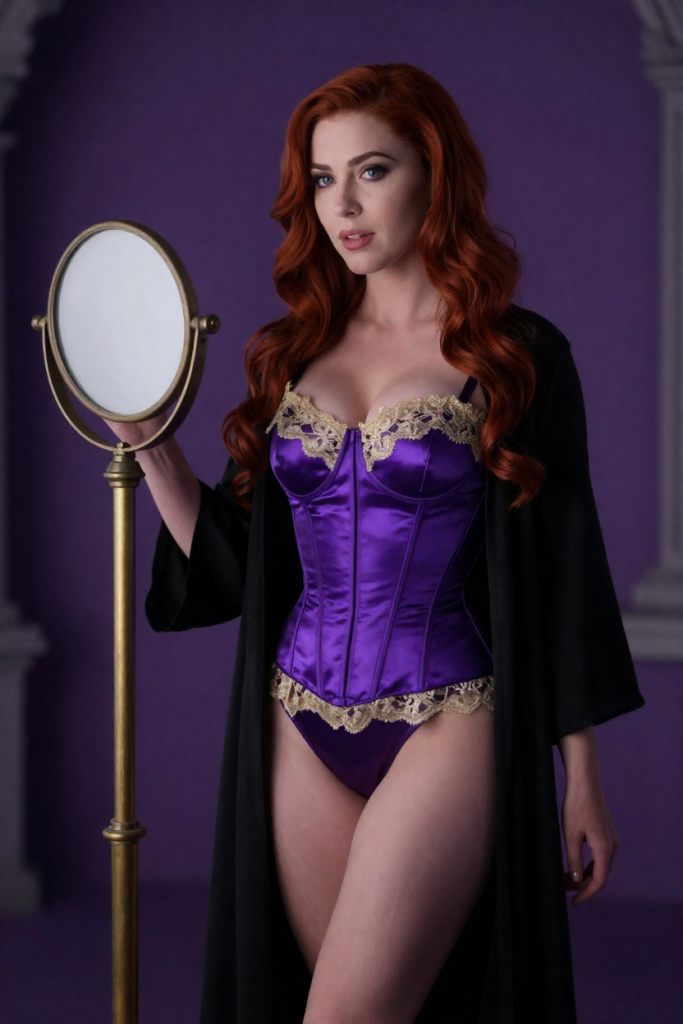
Series fail quietly. Frame one is perfect; by frame nine the muse has a different jaw, her hair has changed colour twice, and the “series” is a crowd of strangers wearing the same dress. The fix used at the seeker loft is boring and total: write the character once, as a paragraph, and never write her again.
The paragraph
A character paragraph fixes identity in clauses that never change: age, face shape, hair (colour, length, style), build, and one signature element — a mole, a scar through one eyebrow, a way of wearing her hair over one shoulder. Violetta, the muse on our generator page, is held by a paragraph of exactly this kind: “a 29-year-old fictional woman with auburn hair in long waves” is its opening, and it is pasted, unedited, into every brief she appears in.
What changes, what never does
Outfit, setting, light and pose are the variables — they change every frame, that is what a series is. The paragraph is the constant. The moment you “improve” the paragraph mid-series, you have cast a new actress and should admit it: start a new series, do not contaminate the old one.
The working routine
- Write the paragraph before the first render, not after the third.
- Keep it in a note beside your briefs; paste, never retype — retyping is where drift enters.
- Revise frames by changing one variable clause at a time. If a frame fails, you know which clause to blame.
- When the paragraph itself must change, version it: v2 begins a visibly new season of the series, and the audience reads it as one.
Consistency is not a model feature you can buy with a more expensive tier. It is a writing discipline, and it is free — which is why the studios that have it look professional and the ones that chase it with re-rolls look busy.